 Demo mode settings


Air Duct Sealing Services
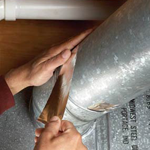
If some rooms never get comfortable, your heating and cooling bills keep climbing or the house stays dusty, leaky ductwork may be part of the reason. Carrier Test Dealer - DS provides residential air duct sealing services in Libertyville and the surrounding area. Sealing closes the leaks in your ductwork so the air your system heats and cools reaches your rooms.
ENERGY STAR estimates that in typical homes, "about 20 to 30 percent of the air that moves through the duct system is lost due to leaks, holes, and poorly installed ducts." That's air you pay to heat or cool that never reaches your rooms.
Is Air Duct Sealing Worth It?
Your ducts carry heated and cooled air from the furnace, heat pump or air conditioner to every room, and sealing them makes sure that air gets where it's going.
How Do You Know If You Need HVAC Duct Sealing?
It's time to have your ductwork checked when you notice:
- High heating and cooling bills in both summer and winter.
- Rooms that are hard to heat or cool, or stuffy rooms that never feel comfortable.
- Ducts that run through an attic, crawlspace or garage, where leaked air is lost outside your living space.
- Tangled, kinked or crushed flexible ducts.
- More dust than usual around the house.
- Ducts that sweat or drip when the air conditioning runs in humid weather.
A room that's hard to heat or cool isn't always a duct problem. Missing insulation, air leaks or old windows in the room itself can be the cause, so it's worth checking the room as well as the ducts that serve it.
Why Are My Ducts Sweating?
Ducts sweat when their outside surface is colder than the dew point of the air around them. In summer, your ducts carry cold air through attics, crawlspaces, unfinished basements and other spaces that aren't cooled, and the humid air there condenses on the cold metal, the same way water beads on a cold drink.
Duct condensation tends to show up as the weather turns warm and humid. Left alone, sweating ducts in the attic or crawlspace can drip and soak the duct insulation and the materials around them.
Fixing sweating ducts takes more than one step:
- Seal the duct joints and seams so the ducts are airtight before any insulation goes on.
- Insulate the ducts along their full length, including the connections, with no gaps, crushed spots or torn wrap.
- Seal the vapor barrier on the outside of the insulation, so humid air can't reach the cold duct.
- Deal with the moisture source, such as a damp crawlspace with an uncovered dirt floor.
Ductwork that's rusted, crushed or badly damaged may need to be replaced rather than sealed.
Need new ductwork? Read about our custom ductwork fabrication.
What Does Air Duct Sealing Cost, and Are There Rebates?
The price depends on how much ductwork you have, how easy it is to reach, how many leaks there are and whether sections need repair or new insulation. Ask us for a quote for your home. Savings may be available from a few places:
- Utility rebates. Some utilities offer duct sealing rebates, usually with a duct leakage test before and after the work.
- Energy-efficiency programs. Some state and local programs include duct sealing, and their rules change from year to year.
- Programs vary by location. What's offered depends on your utility and where you live, so ask Carrier Test Dealer - DS about rebates in your area.
Want to know whether rebates are available for your duct sealing project?
How Does Professional Air Duct Sealing Work?
Professional HVAC duct sealing generally follows four steps:
Inspect the Ductwork
The technician checks the ducts that can be reached, including runs in the attic, crawlspace and garage, for leaks, loose connections and crushed or kinked sections.
Repair and Seal the Leaks
Loose sections are reconnected, crushed flex duct is straightened, and joints, seams and connections are sealed with mastic or foil tape rather than cloth duct tape.
Seal the Registers and Insulate the Ducts
Registers and grilles are sealed to the ducts, and duct insulation is repaired or added where it's missing, crushed or torn on ductwork in unconditioned spaces.
Check Airflow and Safety
Airflow is checked at the registers. In homes with gas or oil appliances, a combustion safety check makes sure they still vent safely after sealing.
A duct leakage test before and after the work uses a calibrated fan to measure how much air the ducts lose, which shows what the sealing changed. Utility rebate programs usually require one.
Frequently Asked Questions About Air Duct Sealing
Yes, when the ducts are leaking. It matters most when your ducts run through an attic, crawlspace or garage, where every leak sends heated or cooled air outside your living space. A look at the ductwork, or a duct leakage test, shows where the air is going before any work starts.
Ducts that run through an attic, crawlspace, garage or other unconditioned space should be insulated once they're sealed, which keeps them from getting hot in summer or cold in winter. On cooling ducts, a sealed vapor barrier on the outside of the insulation also keeps them from sweating.
Ductwork sealing time depends on the size of the duct system, how easy it is to reach and how much repair it needs. Ask us how long the work on your ductwork would take.
No. Cloth duct tape dries out and lets go. When Berkeley Lab researchers tested duct sealants, they reported, "Of all the things we tested, only duct tape failed." Professionals use mastic or foil tape instead, and the Department of Energy recommends having a qualified professional seal and insulate ducts in attics and crawlspaces, so the right sealing materials are used.
Yes. Aerosol duct sealing works from the inside of the ducts. The registers are covered, and a fine sealant mist is blown into the system. As air escapes through the leaks, the sealant particles collect at the edges of each hole until it closes. Sealing by hand with mastic works well on ducts that can be reached, like those in an open attic or crawlspace. Sealing from the inside reaches leaks hidden in walls, floors and ceilings.
Read about our Aeroseal duct sealing.
Duct sealing closes leaks, holes and loose connections so heated and cooled air reaches your rooms. Duct cleaning removes dust, debris and what pests leave behind from inside the ducts and equipment. While air duct cleaning helps the equipment stay in proper working order, air duct sealing can more readily lower energy bills by using energy the system produces more efficiently.
Learn more about our air duct cleaning services.
It can, if leaky return ducts are pulling dusty air in from the attic, crawlspace or garage. Sealing them helps keep that dust out of your home, though regular filter changes still matter too.
It's a good time to do it. Leaky ducts waste part of what a new, more efficient system delivers, and a well-sealed duct system may let you choose a smaller, less costly system. It's worth having the ductwork checked when you plan a new installation.
Replacing a furnace? Read about furnace installation and replacement.
Replacing an air conditioner? Read about AC installation and replacement.
Replacing a heat pump? Read about heat pump installation and replacement.