 Demo mode settings

Air Conditioners
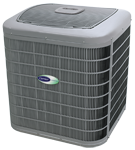
Find the Best Climate Fit for Your Home
Investing in a modern central air conditioning system is about more than just lowering the temperature indoors. A well-designed cooling system also manages high humidity, filters out airborne allergens, and maintains quiet, precise temperature control in every room.
Because selecting the right mechanical hardware requires balancing upfront costs with long-term utility savings, let's help you break down the essential performance metrics, efficiency tiers, and technical specifications you need to choose the right cooling system for your home with confidence.
Understanding Air Conditioner Efficiency
What is SEER2?
SEER2 (Seasonal Energy Efficiency Ratio 2) measures how efficiently an air conditioner uses electricity across a full cooling season — the higher the number, the lower your energy bills. Two units can look identical on the outside while their efficiency ratings vary widely, so this rating is the most reliable way to compare systems and project your long-term savings.
SEER vs. SEER2
SEER2 is an updated rating standard introduced by the DOE. SEER2 standards are intended to provide a better gauge of typical home operating conditions. Whereas the older SEER rating utilized very precise protocols to determine ratings in ideal conditions, SEER2 standards include updated testing means that give a better indication of how a unit will operate in the real world.
EER2 vs. SEER2
EER2 and SEER2 both evaluate an air conditioner’s energy efficiency, but they’re concerned with two different types of temperature conditions:
- EER2 measures an air conditioner’s efficiency at a single peak cooling temperature of 95°F. This metric may concern you if you live in a hot, dry climate where your AC runs at maximum capacity for extended periods.
- SEER2 measures an air conditioner’s average cooling efficiency throughout an entire cooling season, with temperatures ranging from 65°F to 104°F. This metric provides a broader view of yearly performance overall and is the recognized standard for most moderate climates.
Much like checking the miles-per-gallon (MPG) rating when shopping for a new vehicle, these efficiency metrics offer an easy, standardized way to compare efficiencies of different cooling systems. The higher the rating, the less electricity the unit will consume to keep your home comfortable. Just be sure you are comparing either SEER vs. SEER or SEER2 vs. SEER2 (same for EER/EER2).
What Is the Minimum Efficiency Rating Required in My Region?
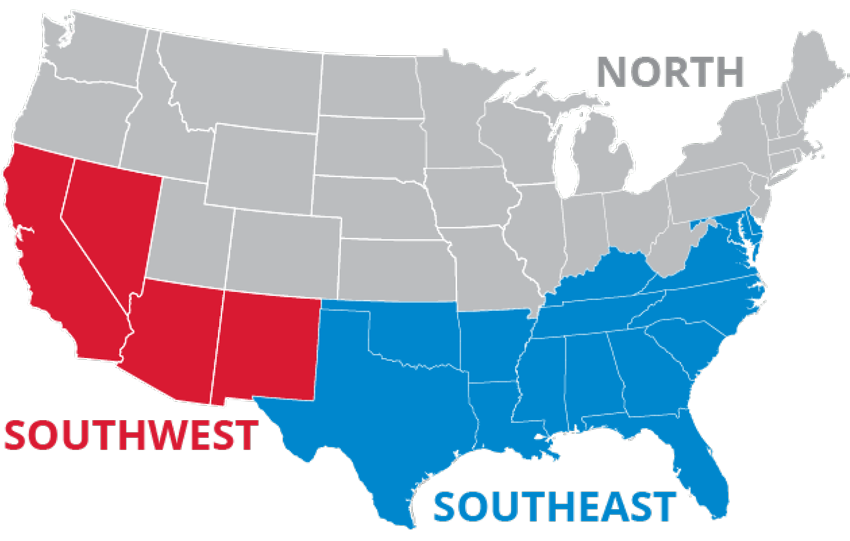
The Department of Energy enforces strict regional minimum efficiency standards across the United States. Because these mandates are based on localized climate trends and seasonal demands, the baseline equipment allowed in your home depends entirely on your geographic region.
The DOE’s regional breakdown by state is as follows:
- North
- 14.0 SEER / 13.4 SEER2
- Southeast
- 15.0 SEER / 14.3 SEER2
- 12.2 EER / 11.7 EER2
- Southwest
- 15.0 SEER / 14.3 SEER2
- 12.2 EER / 11.7 EER2
Modern residential cooling lines meet these local baseline regulations and scale all the way up to an ultra-high-efficiency tier of 24 SEER2. Depending on your average household usage, opting for a system that goes beyond the minimum rating can significantly reduce your monthly electric bills.
Additionally, opting for advanced features such as multi-stage or variable-speed compressors improves indoor comfort and can add meaningful energy savings over these standard baselines.
Which Compressor Is Right For Your Home?
Single-Stage vs. Multi-Stage vs. Variable-Speed Options
The internal compressor serves as the heart of your air conditioner. How that compressor operates directly dictates both your monthly energy bills and your overall indoor comfort:
- Single-Stage Compressors: These systems operate like a standard light switch — they are either 100% on or completely off. When your home calls for cooling, the system runs at maximum capacity until the thermostat is satisfied, then shuts down. While reliable and budget-friendly upfront, this frequent cycling can lead to slight temperature swings and higher energy usage spikes.
- Multi-Stage Compressors: Operating typically at two specific settings (low capacity around 65–70% for milder days, and high capacity at 100% for extreme summer heat), these units run for longer, gentler cycles. This results in better humidity removal, quieter operation, and less wear on components.
- Fully Modulating (Variable-Speed) Compressors: These premium systems continuously scale their output anywhere from 25% to 100% capacity in precise increments. By constantly adapting to real-time structural loads, they eliminate high-energy startup spikes, maintain zone temperatures to within a fraction of a degree, and run quieter than any other compressor type.
How Do Premium Systems Reduce Noise and Control Humidity?
- Sound Profiles: Standard legacy air conditioners frequently disrupt backyard spaces, operating at louder sound thresholds. Premium variable-speed systems use swept fan blades, sound blankets, and lower compressor speeds to bring operating noise down to very low decibel levels, so you can enjoy your outdoor living spaces without interruption.
- Moisture Control: True summer comfort requires removing moisture from the air. Because multi-stage and variable-speed systems run for longer, continuous cycles at lower capacities, they continuously pass air across the cold evaporator coil, pulling significant moisture out of your indoor air even on days when the temperature isn't at its peak.
Comparing Air Conditioning System Tiers
To simplify your research, modern residential cooling systems are organized into three distinct operational tiers. Use this comparison matrix to identify which configuration aligns with your budget, architectural requirements, and long-term financial strategy.
| System Tier | Performance Metric | Who This Is For | What This Tier Offers |
|---|---|---|---|
| Baseline / Standard Tier | Code-Compliant Minimums / Single-Stage Operation | Budget-conscious buyers or properties with low-frequency usage demands. | Delivers reliable, essential operation with the lowest immediate upfront capital investment. |
| Advanced / Mid-Range Tier | High-Performance Ratings / Multi-Stage Operation | Homeowners seeking predictable, mid-to-long-term operational savings and improved comfort. | Delivers a balanced ROI, quieter operational decibels, and enhanced climate control over standard baselines. |
| Premium / Variable Tier | Maximum Industry Ratings / Fully Modulating Operation | Homeowners requiring absolute precision, maximum eco-savings, or solving severe structural climate issues. | Continuously adapts performance to match real-time load, delivering the highest comfort and lowest utility costs. |
Matching Cooling Technology to Your Home's Architecture
Every home features unique architectural elements that influence how air moves and how heat accumulates. Review the profiles below to find the specific technical layout that fits your property's footprint:
- Multi-Story Residential Layouts: Multi-story homes frequently suffer from uneven cooling, leaving upstairs bedrooms hot and uncomfortable while the main floor remains freezing. Variable-speed inverter technology is engineered specifically to solve this issue by supplying a low, continuous stream of conditioned air, preventing heat from stratifying on upper levels.
- High-Humidity Geographic Zones: If your home sits in a region plagued by muggy, humid summers, single-stage equipment often cycles off before it can adequately dehumidify your air. Mid-range multi-stage or premium modulating configurations act as dual-purpose climate controls, running sustained, energy-efficient cycles that strip excess moisture out of your home to prevent mold risks and clammy conditions.
- Direct System Replacement on a Budget: If you are managing an unexpected equipment failure or updating a property with low-frequency usage demands, standard-tier systems offer a dependable solution. These code-compliant, single-stage units feature a lower upfront cost while still providing modern, factory-backed reliability.
Ready to Install Your New AC?
Upgrading your HVAC system is a major investment, and it’s completely natural to have questions before taking the next step. Whether you’re wondering about available tax credits, debating if you should just repair your old unit, or want to know exactly what to expect on installation day, find out how our precision AC installation services protect your investment.
Manual J Load Calculations to Ensure Proper AC Sizing
Raw air conditioning specifications only demonstrate laboratory potential; true efficiency and longevity require precise in-home engineering. To ensure peak performance, a certified technician must perform a Manual J load calculation—assessing your home’s unique layout, insulation, and ductwork—to accurately determine your structural cooling needs. Skipping this crucial step often leads to improperly sized systems, resulting in constant short-cycling, endless running, premature mechanical failure, and inflated energy bills.
Frequently Asked Questions About Residential Air Conditioners
With proactive, professional annual maintenance, a modern residential central air conditioning system has an operational lifespan of roughly 15 to 20 years. Lifespans can vary based on local usage demands, regional runtime environments, and whether the system was accurately sized to match the home's structural load during initial deployment.
From a technical standpoint, a traditional central air conditioner and a standard heat pump operate identically during the summer months. Both systems use a closed refrigeration loop to absorb heat from inside your home and exhaust it outside. The core difference is that a heat pump features a specialized reversing valve, allowing it to reverse the refrigeration cycle in the winter to pull ambient heat from the outside air and pump it indoors to provide energy-efficient heating.
Cooling capacity is measured in BTUs (British Thermal Units) and Tonnage. One ton of mechanical cooling capacity is equal to 12,000 BTUs per hour. Standard residential equipment scales from 1.5 tons (18,000 BTUs/hr) up to 5 tons (60,000 BTUs/hr). Selecting precise system capacity requires a certified layout, because an oversized cooling system will short-cycle rapidly. This causes higher electrical utility overhead and leaves the indoor air feeling cold, muggy, and clammy due to insufficient compressor runtimes.
Residential central air conditioners typically utilize standard 1-inch to 4-inch media pleat filters, which are rated using the MERV (Minimum Efficiency Reporting Value) scale. For most standard residential properties, filters with a MERV rating between 8 and 11 offer an ideal balance, successfully capturing airborne allergens, dust mites, and pet dander without restricting the system's essential volumetric airflow. To protect the internal components, maximize real-world SEER2 operational efficiency, and prevent frozen evaporator coils, it is highly recommended to inspect filters monthly and replace them every 30 to 90 days depending on household usage demands.
No. If your current system runs on R-410A refrigerant, it remains completely legal to operate and service for the rest of its natural lifespan — there is no requirement to replace it because of the transition. As of January 1, 2025, federal phase-down rules mean manufacturers no longer build new residential systems charged with R-410A, so any new air conditioner you purchase today will use a next-generation, lower-impact refrigerant such as R-454B or R-32. From a comfort standpoint, the change is invisible: these refrigerants cool your home in exactly the same way. They are classified as mildly flammable (A2L), so modern systems engineered around them include built-in leak-detection safeguards required by updated building codes. The one practical rule for homeowners is that these refrigerants are not interchangeable — a system must always be serviced with the specific refrigerant listed on its nameplate.
Air Conditioning Product Offering

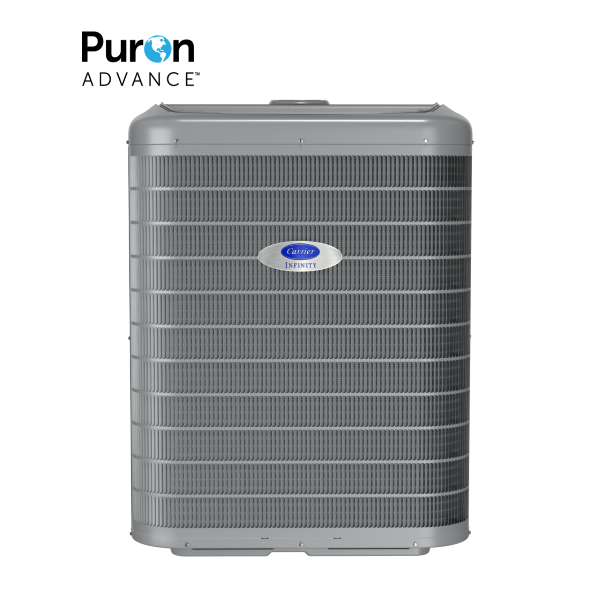
Infinity® Variable-Speed Central Air Conditioner with Greenspeed® IntelligenceView Brochure |
|---|
| Model Family: 26VNA1 |
| Efficiency SEER2: Up to 21 SEER2 |
| Efficiency EER2: Up to 12 EER2 |
| Energy Star Certified: ENERGY STAR® certified |
| Sound Level: Sound Level (As Low As)55 decibels |
| Refrigerant Type: Puron Advance™ refrigerant |
| Compressor: Variable-speed compressor |
| Factory Warranty Parts: Ten-year parts-only limited warranty or “Carrier Customer Choice Warranty” |
| Factory Warranty Compressor: Ten-year parts-only limited warranty or “Carrier Customer Choice Warranty” |
Manufacturer's Stated Benefits:
|

Performance™ 2-Stage Air ConditionerView Brochure |
|---|
| Model Family: 26TPA8 |
| Efficiency SEER2: Up to 18 SEER2 |
| Efficiency EER2: Up to 14 EER2 |
| Energy Star Certified: ENERGY STAR® |
| Sound Level: as low as 67 decibels |
| Refrigerant Type: Puron Advance Refrigerant |
| Compressor: Two-stage |
| Factory Warranty Parts: 10-year parts only limited warranty or Consumer Choice Warranty |
| Factory Warranty Compressor: 10-year parts only limited warranty or Consumer Choice Warranty |
Manufacturer's Stated Benefits:
|
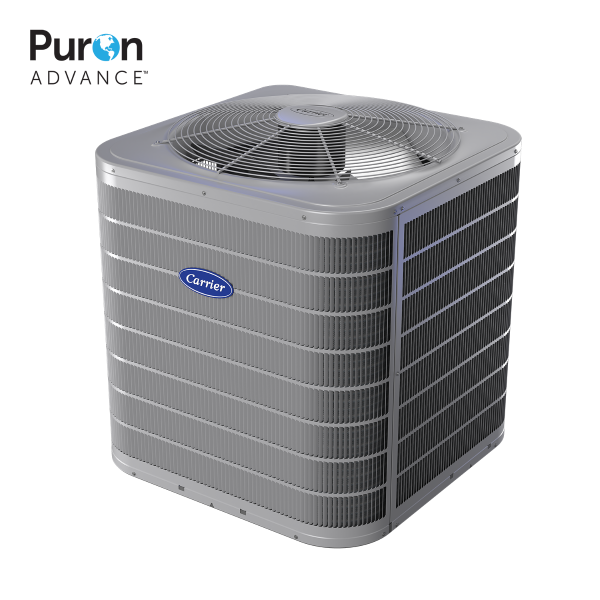
Performance™ Air Conditioner with InteliSense™ TechnologyView Brochure |
|---|
| Model Family: 26SPA6 |
| Efficiency SEER2: Up to 16.5 SEER2 |
| Efficiency EER2: up to 14.5 EER2 |
| Energy Star Certified: ENERGY STAR® certified |
| Sound Level: Sound Level (As Low As) 67 decibels |
| Refrigerant Type: Puron Advance™ refrigerant |
| Compressor: Single-stage scroll compressor |
| Factory Warranty Parts: Either a 10-year parts only limited warranty or “Carrier Customer Choice Warranty” |
| Factory Warranty Compressor: Either a 10-year parts only limited warranty or “Carrier Customer Choice Warranty” |
Manufacturer's Stated Benefits:
|
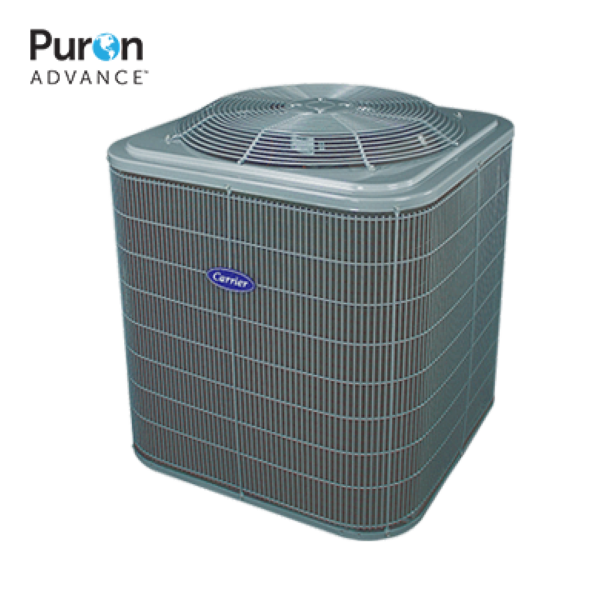
Comfort™ Air ConditionerView Brochure |
|---|
| Model Family: 26SCA5 |
| Efficiency SEER2: Up to 16.5 SEER2 |
| Efficiency EER2: up to 14.5 EER2 |
| Energy Star Certified: ENERGY STAR® certified |
| Sound Level: Offers standard sound performance-dBA as low as 71 |
| Refrigerant Type: Puron Advance™ refrigerant |
| Compressor: Single-stage scroll compressor |
| Factory Warranty Parts: Either a 10-year parts only limited warranty or Consumer Choice Warranty |
| Factory Warranty Compressor: Either a 10-year parts only limited warranty or Consumer Choice Warranty |
| Manufacturer's Stated Benefits: |