 Demo mode settings


Electrical Services
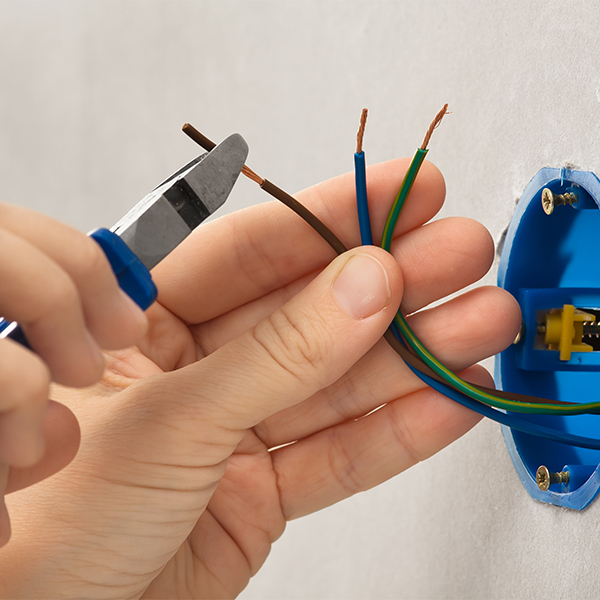
When the lights flicker, a breaker keeps tripping or a new heat pump needs more power than your panel can give, you need an electrician. Carrier Test Dealer - DS provides residential electrical services in Libertyville and the surrounding area, including electrical repair and panel upgrades.
Your heating and cooling system runs on your home's electrical system. The outdoor unit, the furnace or air handler and the thermostat all depend on sound wiring, and a new system may need more capacity at the panel than the old one did.
Residential Electrical Services for Your Home
Most electrical jobs in a home fall into one of six kinds of work:
What Are the Signs of Electrical Problems in a Home?
NFPA estimates that U.S. fire departments responded to an annual average of 46,652 home electrical fires from 2020 to 2024. Call for electrical repair services if you notice any of these warning signs:
- Flickering or dimming lights, especially when an appliance turns on.
- Breakers that trip or fuses that blow again and again.
- Outlets or switch plates that feel warm or look discolored. Some dimmer switches get warm in normal use.
- A burning, rubbery or hot plastic smell near an outlet, switch or appliance.
- Buzzing, sizzling or crackling sounds, or sparks from an outlet.
- A shock or tingle when you touch an appliance, outlet or switch.
- Outlets or circuits that stop working, or plugs that fall out of the outlet.
Stop using the outlet or appliance until an electrician has found the cause. Wiring problems hide inside walls and panels, and the repair is a job for a professional.
Why Does My Breaker Keep Tripping?
A breaker trips to cut power when a circuit carries more current than it should. An occasional trip can mean too many things running on one circuit. A breaker that keeps tripping points to a problem in the wiring, the breaker or an appliance on that circuit, and a qualified electrician should diagnose it instead of resetting it over and over.
What Electrical Work Does Your AC, Heat Pump or Mini-Split Need?
Heating and cooling equipment is one of the largest electrical loads in a home, and each piece needs the right circuit and a way to shut off its power:
| Equipment | What It Needs Electrically |
|---|---|
| Central air conditioner or heat pump | A circuit matched to the outdoor unit's nameplate, plus a disconnect within sight of the unit |
| Ductless mini-split | A dedicated circuit and breaker of its own, plus a disconnect at the outdoor unit |
| Heat pump with backup electric heat | Panel capacity for the backup heat as well as the compressor |
How Do You Protect Your HVAC System From Power Surges?
Surges come from lightning and the utility, and from inside the home when large appliances such as air conditioners switch on and off. A whole-house surge protector helps guard hardwired equipment, including your heating and cooling system.
Can a Generator Keep Your HVAC System Running in an Outage?
A standby generator keeps your heat, air conditioning and other essentials running through a power outage. It connects to your panel through a transfer switch, and the right size depends on what you want to power.
Do You Need an Electrical Panel Upgrade?
Your electrical panel takes power from the utility and sends it to every circuit in your home. An electrical panel upgrade or service upgrade may be the right move when:
- Your home still has a fuse box, or the panel is old, damaged or corroded.
- The panel is out of room for new breakers.
- You're adding a large electric load, such as a heat pump, an EV charger or an electric range.
- You're finishing a basement, building an addition or remodeling.
Panel Upgrade
The breaker box itself is replaced with a new panel, usually with more space for circuits. The service coming in from the utility stays the same.
Service Upgrade
An electrical service upgrade increases the amount of power your home can draw. Along with the panel, the meter base and service cable may change, and the electric utility takes part.
Do You Need a Panel Upgrade for a Heat Pump or EV Charger?
Not always. A load calculation shows how much power your home uses and whether the panel has the capacity and the breaker space for a new circuit. When it comes up short, options such as load management or sharing a circuit can sometimes avoid an upgrade, and when they can't, a larger panel or service makes room for the new equipment.
What Does an Electrical Panel Upgrade Cost?
The price depends on the size of the new panel, whether the service from the utility also has to change, how many circuits move over, the condition of the wiring and local permit fees. A service upgrade takes a permit, an inspection and coordination with your electric utility, which shuts off power for part of the job and restores it once the work passes inspection. Ask us for a quote for your home.
What Does a Home Electrical Inspection Cover?
A home electrical safety inspection is worth considering when you buy a home, when the house is older, after a renovation or addition, and before you add a major appliance. A thorough inspection checks three areas and ends with a plan:
The Electrical Panel
Signs of heat, rust or damage, breakers or fuses matched to their circuits, and room for future circuits.
Wiring and Connections
Older wiring types, loose connections, damaged insulation and unsafe add-ons from past projects.
Outlets, Switches and Protection
Warm or loose outlets, two-prong outlets without a ground, and GFCI and AFCI protection.
Findings and Next Steps
The electrician explains what needs attention now, what can wait and what any repair or upgrade involves.
The cost of a home electrical inspection depends on the size and age of the house.
Frequently Asked Questions About Electrical Services
Carrier Test Dealer - DS does. Heating and cooling equipment runs on your home's electrical system, so a company that handles both can wire a new air conditioner or heat pump, check the panel it connects to and fix electrical problems in the rest of the house.
Replacing an air conditioner? Read about AC installation and replacement.
Replacing a heat pump? Read about heat pump installation and replacement.
An air conditioner or heat pump draws a burst of power each time it starts. If its breaker trips once, the system may just need a few minutes to rest before the breaker is reset. If it trips again, stop resetting it. Repeated trips point to a problem in the outdoor unit, its wiring or the circuit, and a professional should find the cause.
Read about our repair service.
It depends on what your home runs now and what you plan to add. New homes are commonly built with 200-amp service, and older homes may have less. A load calculation shows whether your current service can carry a new heat pump, EV charger or electric appliance, or whether a service upgrade makes sense.
Get it in writing. The FTC advises that a written estimate include a description of the work, the materials, the completion date and the price. Ask whether the permit and inspection are included.
A Level 2 charger runs on a 240-volt circuit and can charge a typical EV overnight. An electrician checks whether your panel has the capacity, adds the circuit, and uses outdoor-rated equipment if the charger goes outside. EV charger installation cost depends on how far the charger is from the panel, whether the panel needs work first and any permit fees where you live.
It's a good first layer. Installed at your panel by an electrician, it diverts large surges coming in on the power line before they enter the house. NIST advises adding plug-in surge protectors for sensitive electronics, especially anything also connected to a cable, satellite or phone line, and no surge protector can handle a direct lightning strike.
Both deserve an evaluation by an electrician. CPSC warns that aluminum branch wiring connections can fail and overheat with little or no warning, and it recommends permanent remediation, such as rewiring with copper or a CPSC-recognized connector repair. Knob-and-tube wiring may lack the capacity for today's needs and can be a fire hazard where insulation covers it, and some insurers ask about it. Rewiring a house is not always the answer. When it is, the cost of rewiring or knob-and-tube replacement depends on the size of the house and how much of the wiring has to change.
A GFCI (ground-fault circuit interrupter) protects people from shock, and it belongs where water is close by, such as kitchens, bathrooms and outdoors. An AFCI (arc-fault circuit interrupter) shuts off power when it senses the arcing in wiring that can start a fire, something ordinary breakers don't respond to. Older homes may benefit from added AFCI protection. Press the TEST button on both once a month.