 Demo mode settings

Heat Pumps
A residential heat pump is a single electric system that handles both heating and cooling for your home. One unit does the job of a separate furnace and air conditioner.
Unlike a traditional air conditioner or furnace that creates temperature change by burning fuel, a heat pump simply moves existing heat. In summer it works exactly like an air conditioner, pulling heat out of your home and releasing it outdoors. In winter the cycle reverses, drawing warmth from the outdoor air and delivering it inside.
Because a heat pump moves heat instead of generating it, it gives Libertyville homeowners an energy-efficient alternative to fossil-fuel furnaces and electric baseboard heating.
Is a Heat Pump Right for Your Home?
For most homes the answer is yes. A heat pump can serve as the primary comfort system. The ideal configuration depends on your climate and whether you already have a gas furnace:
If you live in a colder area and want to maximize your energy savings, a combination system might be exactly what your home needs. Explore our residential Hybrid / Dual-Fuel System to see how pairing a heat pump with a high-efficiency gas furnace can keep you perfectly comfortable all winter long.
Heat Pump Ratings Explained
HSPF2 vs. SEER2 vs. EER2
Because a heat pump both heats and cools, it carries one rating an air conditioner never does: a heating-efficiency score. Three Department of Energy metrics describe how much electricity a heat pump uses, and in every case a higher number means better efficiency:
- HSPF2 (Heating Seasonal Performance Factor 2): Measures heating efficiency across an entire winter season. This is the rating unique to heat pumps, and the one that determines your winter heating bills.
- SEER2 (Seasonal Energy Efficiency Ratio 2): Measures cooling efficiency across an average summer season. Higher ratings correlate directly with lower summer electric bills.
- EER2 (Energy Efficiency Ratio 2): Measures cooling efficiency at a fixed peak outdoor temperature of 95°F, indicating how the system holds up during severe summer heatwaves.
What Is a Good HSPF2 Rating?
HSPF2 is the metric that sets heat pumps apart from a standard air conditioner, so it is worth knowing where a given system lands. As of 2023, the federal minimum for a new split-system heat pump is 7.5 HSPF2, and ratings climb through several meaningful tiers from there:
- Code minimum (7.5 HSPF2): The baseline efficiency a new split-system heat pump is legally required to meet.
- ENERGY STAR (7.8 HSPF2 and up): The threshold for federal ENERGY STAR certification and meaningful seasonal savings over the baseline.
- High-efficiency (9.0 HSPF2 and up): Considered highly efficient and ideal for colder climates, with top-performing systems reaching roughly 10.5 HSPF2.
Heat Pump Efficiency Tiers
Now that the ratings make sense, here is how they map to equipment. Heat pumps come in three efficiency tiers, distinguished mainly by their compressor type and their SEER2 and HSPF2 ratings. Use the comparison below to match the right tier to your climate and how heavily you'll run the system:
| System Tier | Efficiency & Technology | Who Is This For? | Your Benefits |
|---|---|---|---|
| Standard Tier | Code-Compliant Minimums, Single-Stage Operation | Budget-focused projects, rental properties, or mild climates with low usage demands. | Provides standard climate control with the lowest upfront equipment investment. |
| Advanced Tier | Mid-to-High SEER2 & HSPF2, Two-Stage Operation | Homeowners seeking consistent utility savings and improved humidity control. | Delivers balanced operational savings, quieter performance, and staged temperature management. |
| Premium Tier | Maximum SEER2 & HSPF2, Variable-Speed Inverter | Homeowners solving severe hot/cold spots, or seeking lowest possible monthly utility overhead. | Continuously modulates output to match real-time load, offering precise temperature control and lowest energy consumption. |
Choosing the Right Heat Pump for Your Home
Once you've narrowed down the efficiency tier and features that fit your home, the next step is a professional evaluation. Correctly sizing a heat pump takes a Manual J load calculation that accounts for your home's insulation, windows, square footage, and local climate.
When you're ready, our Heat Pump Installation & Replacement page covers what comes next:
- Available rebates and financing options
- What to expect during the installation process
- Warranty coverage and ongoing maintenance
To get a properly sized recommendation for your home, request an on-site evaluation from Carrier Test Dealer - DS, serving Libertyville and the surrounding area.
Do Heat Pumps Work in Cold Weather?
Yes. Today's heat pumps work in cold weather, and cold-climate models keep heating efficiently well below freezing. That said, every heat pump produces less heat as the outdoor temperature falls, so a single seasonal rating only tells part of the story.
Standard single-stage units begin to lose efficiency and capacity once temperatures drop below roughly 25–30°F. Purpose-built cold-climate heat pumps are engineered to push that limit dramatically lower.
This is exactly why colder regions often pair a heat pump with a gas furnace in a Hybrid / Dual-Fuel System. The heat pump handles efficient heating through the milder months, and the furnace takes over only on the coldest days.
Frequently Asked Questions About Heat Pumps
A heat pump requires professional maintenance twice per year: once before the cooling season and once before the heating season. Because a heat pump operates year-round rather than sitting idle for half the year like a furnace or standard air conditioner, components like the reversing valve, defrost controls, and refrigerant levels must be checked regularly. Homeowners should also check or replace the indoor air filter every 30 to 90 days to maintain correct system airflow.
A properly maintained heat pump generally lasts between 10 and 15 years. This lifespan is slightly shorter than a standalone gas furnace because the outdoor unit operates during both the summer and winter months. Regular preventative maintenance, timely filter changes, and choosing a variable-speed model that reduces system wear and tear can help extend the equipment's operational life toward the upper end of this range.
Yes, central heat pumps connect directly to standard, existing home ductwork. However, a technician must inspect your current ventilation system prior to installation to ensure there are no severe air leaks or restrictive layouts. Because heat pumps deliver air at a slightly lower, more consistent temperature than older fossil-fuel furnaces, the duct design must be evaluated during your initial system sizing to guarantee proper air delivery across every room.
Heat Pump Product Offering

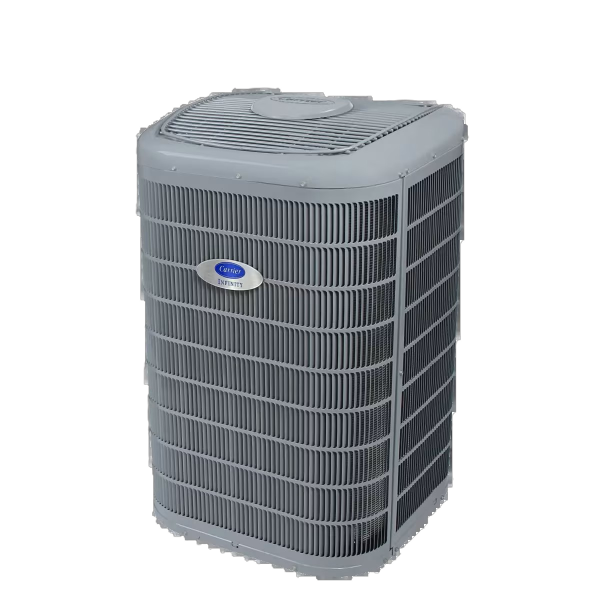
Infinity® Variable-Speed Heat Pump With Greenspeed® IntelligenceView Brochure |
|---|
| Model Family: 27VNA0 |
| Efficiency SEER2: Up to 20 SEER2 |
| Efficiency EER2: Up to 11.5 EER2 |
| Efficiency HSPF2: up to 9.5 HSPF2 |
| Energy Star Certified: ENERGY STAR® certified |
| Sound Level: Sound Level (As Low As) 54 decibels |
| Refrigerant Type: Puron Advance |
| Compressor: Variable-speed Compressor |
| Factory Warranty Parts: 10-year parts limited warranty upon timely registration or “Carrier Customer Choice Warranty” |
| Factory Warranty Compressor: 10-year parts limited warranty upon timely registration or “Carrier Customer Choice Warranty” |
Manufacturer's Stated Benefits:
|
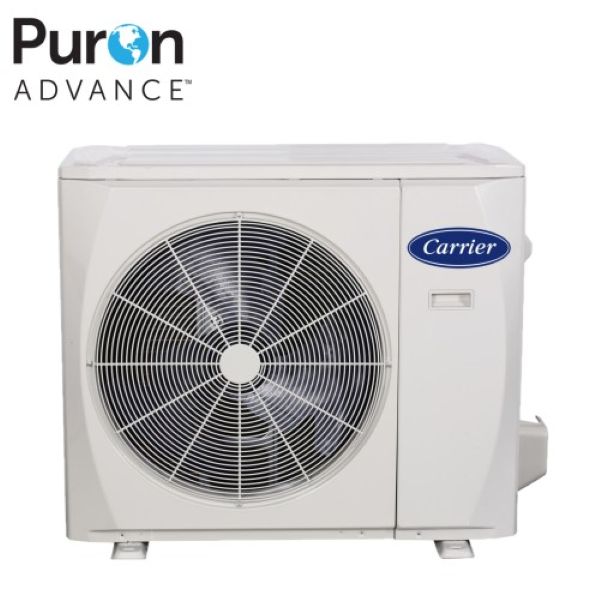
Performance™ Crossover Heat PumpView Brochure |
|---|
| Model Family: 37MUHAQ |
| Efficiency SEER2: Up to 19 SEER2 |
| Efficiency EER2: Up to 12.4 EER2 |
| Efficiency HSPF2: Up to 10.8 HSPF2 |
| Energy Star Certified: ENERGY STAR® certified |
| Sound Level: As low as 59 decibels |
| Refrigerant Type: Puron Advanced |
| Compressor: Variable-speed |
| Factory Warranty Parts: 10-year parts only limited warranty or Consumer Choice Warranty |
| Factory Warranty Compressor: 10-year parts only limited warranty or Consumer Choice Warranty |
| Manufacturer's Stated Benefits: |
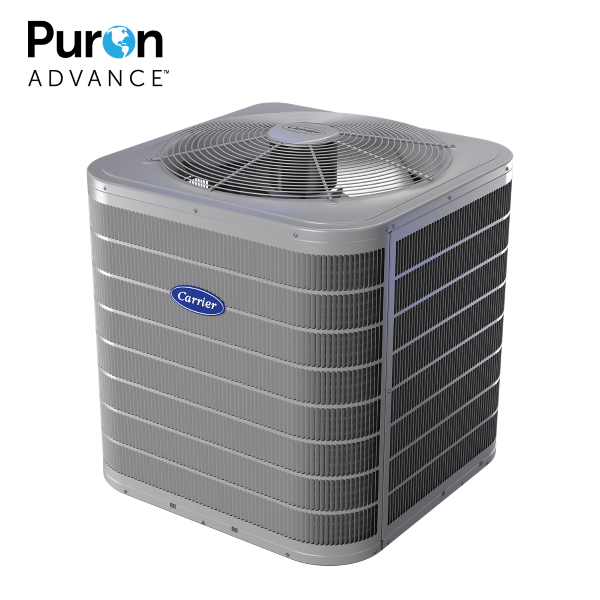
Performance™ 2-Stage Heat Pump with InteliSense™ TechnologyView Brochure |
|---|
| Model Family: 27TPA8 |
| Efficiency SEER2: Up to 18.5 SEER2 |
| Efficiency EER2: Up to 14 EER2 |
| Efficiency HSPF2: up to 8.5 HSPF2 |
| Energy Star Certified: ENERGY STAR® certified |
| Sound Level: Sound Level (As Low As) 65 decibels |
| Refrigerant Type: Puron Advance |
| Compressor: Two-stage Compressor |
| Factory Warranty Parts: 10-year parts limited warranty upon timely registration or “Carrier Customer Choice Warranty” |
| Factory Warranty Compressor: N/A |
Manufacturer's Stated Benefits:
|
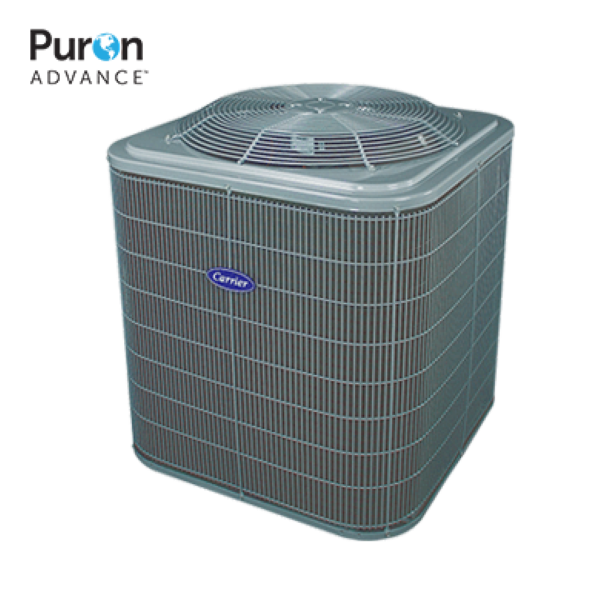
Comfort™ Heat Pump with Puron AdvanceView Brochure |
|---|
| Model Family: 27SCA5 |
| Efficiency SEER2: Up to 16 SEER2 |
| Efficiency EER2: Up to 13 EER2 |
| Efficiency HSPF2: Up to 8.1 HSPF2 |
| Energy Star Certified: Select sizes ENERGY STAR® certified |
| Sound Level: As low as 70 decibels |
| Refrigerant Type: Puron Advance™ |
| Compressor: Single-stage |
| Factory Warranty Parts: 10-year parts limited warranty upon timely registration or “Carrier Customer Choice Warranty” |
| Factory Warranty Compressor: 10-year parts limited warranty upon timely registration or “Carrier Customer Choice Warranty” |
Manufacturer's Stated Benefits:
|