 Demo mode settings

Boilers
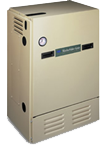

How Does a Boiler Work?
A boiler heats your home with water instead of air. Rather than blowing warm air through ducts like a furnace, it heats water and a quiet pump circulates it through a sealed loop of pipes to radiators or tubing under your floors. This approach is called hydronic heating, and it delivers steady, even warmth without the drafts or noise of forced air.
Here's what happens each time your thermostat calls for heat:
Firing Up
Your thermostat calls for heat, and the boiler's gas burner or electric heating element switches on.
Heating the Water
Water flows across a heavy-duty cast iron or stainless steel heat exchanger, which raises it to the temperature you've set.
Quiet Circulation
A quiet pump pushes the heated water through sealed pipes running throughout your home.
Radiant Warmth
The water passes through radiators or under-floor tubing, warming the room's surfaces, then loops back to be reheated.
How Heat Reaches Your Rooms
A boiler makes the heat — how it reaches your rooms depends on what's installed in your home. The three most common setups:
- Radiators. Cast-iron or panel radiators mounted on the wall. Hot water flows through them and radiates steady warmth into the room. Most common in older homes.
- Baseboard. Low units that run along the bottom of your walls. Water moves through a finned pipe inside, gently warming the air that rises into the room.
- Radiant floor. Tubing run beneath the floor turns the whole floor into a quiet heat source — even, comfortable warmth underfoot, with no visible equipment.
Types of Boilers
Modern boilers generally fall into three categories, based on how they're built and how efficiently they use fuel:
What Is AFUE?
You'll notice each type rated by its AFUE, short for Annual Fuel Utilization Efficiency — the standard measure of how much of a boiler's fuel actually becomes usable heat over a full heating season, rather than escaping up the flue. It's expressed as a percentage, so a boiler rated at 90% AFUE turns 90 cents of every fuel dollar into heat for your home and loses the other 10% through exhaust. The higher the AFUE, the less fuel you waste and the lower your heating bills.
Condensing vs. Non-Condensing Boiler Units
Whether a boiler is condensing or non-condensing changes what your setup needs, because the two handle exhaust and waste very differently:
Boiler vs. Furnace
Both heat your home, but they work differently. Here's how a hydronic boiler stacks up against a forced-air furnace:
| Feature | Boiler (Hydronic) | Furnace (Forced Air) |
|---|---|---|
| How the heat feels | Even, radiant warmth from floors and surfaces | Warm air that can feel drafty or uneven |
| Indoor air quality | Doesn't circulate dust, dander, or pollen | Moving air can stir up dust and allergens |
| Noise | Near-silent — just a small pump | Audible blower and rushing air |
| Zoning | Easy, room-by-room with zone valves | Possible, but needs added dampers |
| Cooling | Heating only — needs a separate AC system | Shares ducts with central air conditioning |
| Distribution | Water through radiators or under-floor tubing | Air through ductwork |
| Typical lifespan | 15–25 years | 15–20 years |
Key Benefits Of A Boiler System
Here's why homeowners with the right setup tend to love them:
- Even, comfortable heat. Warmth radiates from heated floors and radiators instead of blowing from a vent, so the whole room warms evenly with far fewer hot-and-cold spots.
- Cleaner indoor air. No fans or ducts means dust, dander, and pollen don't get pushed around your home — a real perk for allergy and asthma households.
- Near-silent operation. The only moving part is a small circulating pump; there's no blower roaring through ductwork.
- Easy zoning. Independent thermostats and zone valves heat only the rooms you're using, so you're not paying to warm empty ones.
- Long service life. Few moving parts and a heavy-duty heat exchanger help a well-maintained boiler outlast many forced-air furnaces.
Deciding If a Boiler Is Right for You
Because a boiler moves heat through water pipes rather than air ducts, it fits some homes better than others. Here's how to tell whether it's a fit for yours.
When a Boiler Fits Best
- Your home already has hydronic heating. If you have cast-iron radiators, baseboard heaters, or under-floor PEX tubing, upgrading to a modern boiler is a straightforward, high-performance swap.
- Someone in your household has allergies or asthma. A boiler's duct-free heat doesn't blow dust and pollen around the house, so it's easier on sensitive airways.
- You want room-by-room control. Boilers handle zoning well. With separate thermostats and zone valves, you can keep different floors or rooms at different temperatures without complex air dampers.
When to Consider Other Options
- Your home already has ductwork. If you have working air ducts, a gas furnace or an efficient heat pump is usually simpler and more economical to install.
- You have neither pipes nor ducts. In a home with no ductwork and no water piping (for example, one heated by electric baseboard strips), a boiler means running new pipe through walls and floors. A ductless mini-split system is often a lower-impact way to get there.
Boiler Fuel Options
A boiler's running cost depends a lot on what it burns. Most systems can be set up to match whatever fuel is available where you live:
| Fuel | Best For | Notes |
|---|---|---|
| Natural gas | Cities and suburbs with a gas main | Clean-burning, cost-effective, and piped in continuously from the utility. |
| Propane (LP) | Rural homes without a gas main | Runs from an on-site tank using a factory conversion kit. |
| Electricity | Smaller spaces or additions | No venting or fuel line, and 100% efficient at the unit — though electricity costs more to run in many areas. |
| Heating oil | Older homes | Burns hot for strong radiant heat; draws from an on-site storage tank. |
Boiler Maintenance Checklist
A boiler has few moving parts, but a yearly checkup keeps it running efficiently and safely — and helps it reach the upper end of that 15-to-25-year lifespan. A standard annual service usually includes:
- Checking system pressure and topping it off if low
- Releasing trapped air (bleeding) from the radiators and lines
- Inspecting the heat exchanger and burner for soot, scale, or corrosion
- Testing the safety controls and pressure-relief valve
- Flushing or treating the water to prevent rust and lime scale
- Checking the pump, expansion tank, and venting
Even with faithful yearly maintenance, every boiler eventually reaches the end of its service life. When it's time to plan a replacement, our installation and replacement page walks you through sizing, the process, and what to expect.
What Size Boiler Do I Need?
Don't size a boiler by guesswork or by simply matching your old unit. A boiler that's too small never fully warms the house; one that's too large "short-cycles" — switching on and off rapidly — which wastes fuel and wears out parts early.
To get it right, a licensed professional runs a Manual J load calculation — the industry-standard way to find exactly how many BTUs (units of heat) your home needs. It weighs details like:
- Square footage and layout of the rooms that need heat.
- Insulation levels (the R-value) in your walls, attic, and crawlspaces.
- Windows and doors — how many, how big, and how efficient.
- Local climate — how cold your winters actually get.
- Air leakage — how much outside air slips in through gaps in the home.
Frequently Asked Questions About Boilers
With regular maintenance, a quality boiler usually lasts 15 to 25 years — often a decade longer than a forced-air furnace. Heavy cast iron or stainless steel heat exchangers and few moving parts mean less wear over time. Lifespan depends most on good water chemistry and keeping rust and lime scale from building up inside.
Both heat water, but for different jobs. A water heater supplies the hot water at your taps, showers, and appliances. A boiler is a space-heating system — it heats water in a sealed loop and sends it to radiators or under-floor tubing to warm your home. A combi boiler does both from one unit.
That's usually "kettling." Lime scale building up inside the heat exchanger restricts water flow, so pockets of water boil and steam bubbles collapse with a bang. It makes the system work harder, lowers efficiency, and can crack the heat exchanger if ignored — so it's worth having checked promptly.
Bleeding a radiator simply means releasing the air trapped inside it. Plan on doing it about once a year, at the start of the heating season — air builds up at the top of a radiator over time and blocks hot water from filling it. If a radiator is warm at the bottom but cold at the top, opening its vent valve with a radiator key lets the air out and restores full heat.
It's possible, but it's a big project. Because boilers don't use ducts, you'd need new water pipes run through walls and floors to feed radiators or baseboards. If your home already has working ductwork, a higher-efficiency furnace or a heat pump is usually the more practical upgrade.
Gas Boiler Product Offering


Performance ™ 84 Gas- Fired BoilerView Brochure |
|---|
| Model Family: BW3 |
| Annual Fuel Utilization Efficiency: Up to 84.4% AFUE |
| Energy Star Certified: No |
| Heat Exchanger Warranty: 20-year heat exchanger limited warranty |
| Warranty: 10-year parts limited warranty if registered in 90 days |
Manufacturer's Stated Benefits:
|
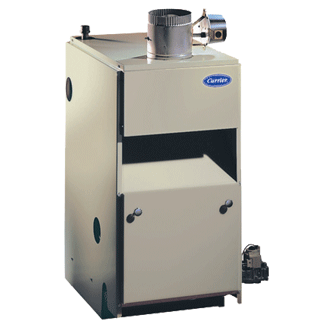
Comfort™ 80 Gas- Fired BoilerView Brochure |
|---|
| Model Family: BS2 |
| Annual Fuel Utilization Efficiency: Up to 82.7% AFUE |
| Energy Star Certified: N/A |
| Heat Exchanger Warranty: 12-year heat exchanger limited warranty |
| Warranty: 10-year parts limited warranty |
Manufacturer's Stated Benefits:
|
Comfort™ 82 Gas-Fired BoilerView Brochure |
|---|
| Model Family: BWB |
| Annual Fuel Utilization Efficiency: Up to 84% AFUE |
| Energy Star Certified: No |
| Heat Exchanger Warranty: 20-year heat exchanger limited warranty |
| Warranty: 10-year parts limited warranty |
Manufacturer's Stated Benefits:
|
Oil Boiler Product Offering

Performance™ 86 Oil- Fired BoilerView Brochure |
|---|
| Model Family: BW5 |
| Annual Fuel Utilization Efficiency: Up to 86.2% AFUE |
| Energy Star Certified: ENERGY STAR® Qualified |
| Heat Exchanger Warranty: 20-year heat exchanger limited warranty |
| Warranty: 10-year parts limited warranty if registered in 90 days |
Manufacturer's Stated Benefits:
|
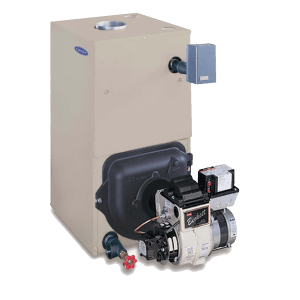
Performance™ 86 Oil- Fired BoilerView Brochure |
|---|
| Model Family: BW4 |
| Annual Fuel Utilization Efficiency: Up to 86.2% AFUE |
| Energy Star Certified: ENERGY STAR® |
| Heat Exchanger Warranty: 20-year heat exchanger limited warranty |
| Warranty: 10-year parts limited warranty if registered in 90 days |
Manufacturer's Stated Benefits:
|