 Demo mode settings

Air Handlers
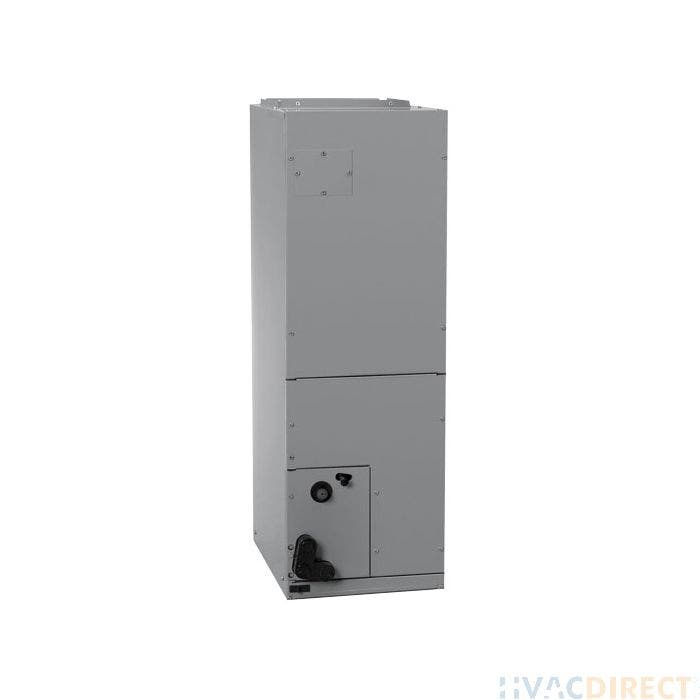
Your Home's Indoor Climate Delivery System
What Is an Air Handler and What Does It Do?
An air handler is the indoor half of your home's heating and cooling system — the unit that physically moves heated or cooled air through your home. Often called a fan coil, it works together with your outdoor unit, moving heated or cooled air through your ducts and out to every room. The air handler is your delivery engine for your HVAC system.
How Does an Air Handler Work?
Without a working air handler, the heated or cooled air your system produces can't actually reach your rooms. Inside its cabinet are three key parts:
An air handler is the indoor portion of a two-part system, connecting with two types of outdoor systems:
- Central Air Conditioners — pairs with an outdoor cooling unit to distribute crisp, dehumidified air all summer.
- Heat Pumps — pairs with an outdoor heat pump to deliver balanced heating and cooling year-round.
Who Is an Air Handler For?
As a residential homeowner, you may be wondering if you need an air handler for your home. Here are some common situations where you might need an air handler:
| Who Is It Ideal For | When It Applies | Why an Air Handler Is the Right Choice |
|---|---|---|
| All-Electric Homes | When your home relies on an outdoor heat pump for both heating and cooling, and you do not have access to (or prefer not to use) natural gas or propane. | A heat pump cannot distribute air on its own. The air handler acts as its essential indoor partner, housing the blower fan and indoor coil to circulate conditioned air. Plus, it can hold electric backup heating elements to keep you warm on the coldest winter days. |
| Boiler-Heated Homes | When your home uses a boiler with radiators or baseboards for heat, but you want to add central air conditioning and whole-home air filtration. | It bridges the gap between your boiler and central air. By adding a hydronic coil to the air handler, hot water from your boiler can heat your home through ductwork in the winter, while the same unit seamlessly switches to central AC in the summer. |
| Large or Multi-Story Homes | When your home suffers from hot and cold spots, or you want to create independent temperature “zones” for different floors or wings of the house. | Air handlers are highly modular and often feature variable-speed motors. This makes them perfect for advanced zoning systems, allowing you to install a dedicated unit (like in an attic or closet) to precisely control the climate of a specific zone without wasting energy. |
Does an Air Handler Fit in My Home?
Almost any home has room for an air handler — they're built to fit a utility closet, basement, attic, or crawlspace, and they're set up one of three ways depending on your home's layout:
- Upflow: Stands upright and pushes air up into your ducts — the standard setup for basements and first-floor closets.
- Downflow: Stands upright but pushes air down — for homes without a basement, where the ducts run below the floor (through a slab or crawlspace).
- Horizontal: Lies flat on its side to fit tight spaces like attics and low crawlspaces.
Blower Motor Types: Standard vs. Variable-Speed
The blower motor inside your air handler determines how evenly air moves through your rooms and how quietly the system runs. There are two main types:
Why Do I Need a Properly Sized Standalone Air Handler?
If your home relies on an outdoor heat pump or AC rather than a traditional gas furnace, a standalone air handler is the invisible workhorse of your HVAC system. Running entirely on electricity, it circulates conditioned air and acts as the central hub for whole-home filtration.
To get the performance you actually paid for, your air handler must be precisely matched to your outdoor unit. Here is why:
- Guaranteed Efficiency: Your system's SEER2 (cooling) and HSPF2 (heating) ratings are only achieved when both units work together as a matched pair.
- Longer Equipment Life: Mismatched units can't communicate properly. This forces the system to work harder, accelerating wear and tear.
- Maximum Comfort: A perfectly sized pair ensures optimal airflow and consistent temperatures throughout your home.
Frequently Asked Questions About Air Handlers
With regular maintenance, an air handler typically lasts 15 to 20 years — similar to the outdoor unit it's paired with. Because the blower runs during both the heating and cooling seasons, keeping the filter clean and scheduling annual service helps it reach the upper end of that range. Many homeowners replace the air handler and outdoor unit together so the system stays a matched, warrantied pair.
Inspect the indoor air filter every 30 days and replace or clean it at least every 90 days. Because an air handler runs during both the heating and cooling seasons, it filters your air year-round. A clogged filter restricts the airflow, which can overheat the blower motor and even freeze up the system.
It can, in two situations: severely restricted airflow (usually a clogged filter or too many closed supply vents) or low refrigerant from a leak — either one lets the indoor coil drop below freezing until ice forms on it. If you ever see ice on the cabinet or refrigerant lines, switch the thermostat from "Cool" to "Off" and set the fan to "On" to melt it, then have a technician inspect the system before running it again. Changing the filter on schedule is the simplest way to prevent it.
Usually not. The indoor and outdoor units are designed to work as a matched pair, so replacing only the outdoor unit often voids the manufacturer's warranty and can keep the new system from reaching its rated efficiency. Replacing both together as a matched set is almost always the better long-term value.
There's no real difference — both names describe the same piece of equipment. Manufacturers often say "fan coil" for an indoor unit paired with a heat pump, while "air handler" is the more general term for any indoor unit with a blower and coil inside.
Standard air handlers don't make heat on their own, but they can be fitted with electric heat strips inside the cabinet. These act as a backup, switching on automatically only on the coldest days, when an outdoor heat pump needs a little extra help to keep up with your thermostat.
Yes. Since all the air your system moves passes through the air handler, it's the natural place to improve your home's air quality. A higher-rated filter (a higher MERV number) captures more dust, pollen, and allergens, and the cabinet often has room for add-ons like air purifiers or UV lights — just make sure any filter upgrade is matched to your system's airflow so it doesn't restrict the blower.
Air Handler Product Offering

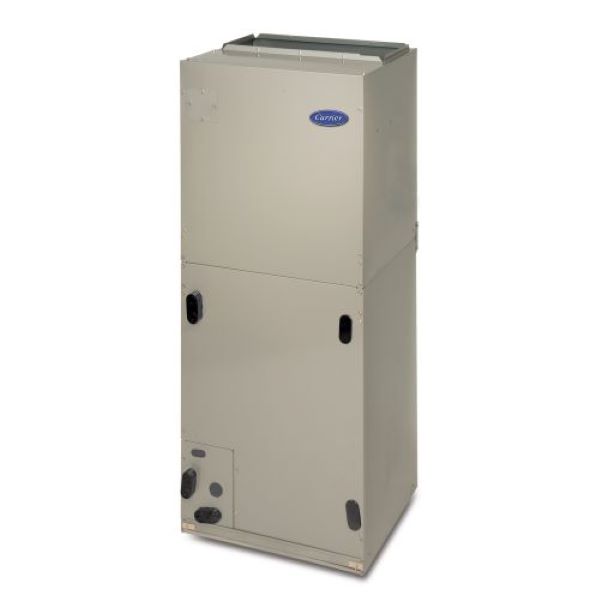
Infinity® Variable-Speed Fan CoilView Brochure |
|---|
| Model Family: FE5B |
| Refrigerant Type: Puron Advance™ |
| Blower Motor: Variable-speed |
| Factory Warranty Parts: 10-year parts limited warranty upon timely registration or “Carrier Customer Choice Warranty” |
Manufacturer's Stated Benefits:
|
Performance™ Fan Coil with InteliSense™ TechnologyView Brochure |
|---|
| Model Family: FT5 |
| Refrigerant Type: Puron Advance™ |
| Blower Motor: Variable-speed |
| Factory Warranty Parts: 10-year parts limited warranty upon timely registration or “Carrier Customer Choice Warranty” |
Manufacturer's Stated Benefits:
|
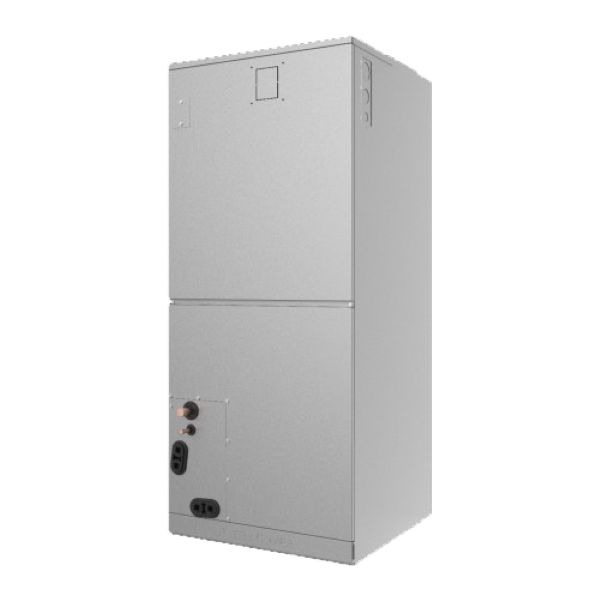
Comfort™ Crossover Air Handler UnitView Brochure |
|---|
| Model Family: 45MUAA |
| Refrigerant Type: Puron Advance |
| Blower Motor: Variable-speed technology |
| Factory Warranty Parts: Select either a 10-year parts only limited warranty or a 5-year parts, plus a 3-year labor limited warranty. |
Manufacturer's Stated Benefits:
|
Comfort™ Fan CoilView Brochure |
|---|
| Model Family: FJ5 |
| Refrigerant Type: Puron Advance |
| Blower Motor: Multi 5-speed, ECM blower motor |
| Factory Warranty Parts: 10-year parts limited warranty upon timely registration or “Carrier Customer Choice Warranty” |
Manufacturer's Stated Benefits:
|