 Demo mode settings

Geothermal Heat Pumps
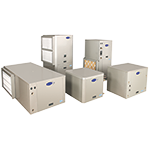
A geothermal heat pump, also called a ground-source heat pump, heats and cools your home with the steady temperature of the earth under your yard. The air outside swings from summer heat to winter cold, but a few feet down the ground stays between about 40°F and 70°F all year, depending on where you live.
That makes the ground warmer than the outdoor air in winter and cooler than it in summer. A geothermal system uses the difference: it draws heat from the ground into your home when it's cold and sends heat from your home back into the ground when it's hot. Because it moves heat instead of burning fuel to make it, geothermal gives Libertyville homeowners one of the most efficient ways to heat and cool a home.
How Does a Geothermal Heat Pump Work?
Every geothermal system has three main parts working together:
Many geothermal systems can also help with your hot water. An optional desuperheater uses some of the heat the system collects to preheat the water in your water heater. In summer, that heat comes from what the system pulls out of your home, so you get some hot water almost for free.
Benefits of Geothermal Heating and Cooling
- Lower heating and cooling bills. An ENERGY STAR certified closed-loop geothermal heat pump is rated to deliver at least 3.6 units of heat for every unit of electricity it uses. Electric resistance heat, like baseboard heaters, delivers one.
- Steady comfort in any weather. The ground temperature barely changes, so a geothermal system doesn't lose efficiency on the coldest or hottest days the way equipment that depends on the outdoor air can.
- Quiet, with nothing outside. There's no outdoor unit, so there's no fan noise in your yard and no equipment exposed to the weather.
- No combustion in your home. Geothermal runs on electricity, so there's no flame, no flue and no fuel deliveries.
- Little maintenance. The loop is sealed and buried, and the heat pump sits indoors, so upkeep is mostly filter changes and regular checkups.
Geothermal vs. Air-Source Heat Pump vs. Furnace + AC
Geothermal costs the most to install and the least to run. Here's how it compares with the two systems most homeowners weigh it against:
| Feature | Geothermal Heat Pump | Air-Source Heat Pump | Furnace + AC |
|---|---|---|---|
| Heat source | The ground under your yard | The outdoor air | Burning gas or oil, with a separate AC for cooling |
| Performance in extreme cold | Steady, because the ground temperature barely changes | Heat output drops as temperatures fall | Strong heat, but it always burns fuel |
| Running cost | Lowest | Low to moderate | Higher |
| Upfront cost | Highest, mainly for the ground loop | Moderate | Moderate |
| Outdoor equipment | None above ground | Outdoor unit | Outdoor AC unit |
| Expected lifespan | Indoor unit up to about 24 years; ground loop 50+ years | About 10 to 15 years | About 15 to 20 years |
Is Geothermal Right for Your Home?
Geothermal is a long-term investment, and it fits some homes and plans better than others. Here's how to tell:
When Geothermal Fits Best
- You plan to stay in your home for years. Geothermal costs more up front and pays you back through lower energy bills, so the longer you stay, the more you save.
- You heat with propane, oil or electric resistance heat. These are some of the most expensive ways to heat a home, so switching to geothermal usually saves the most.
- You have room for a ground loop. Open yard space suits a horizontal loop, and a vertical loop fits a smaller lot because it goes down instead of out.
- You're building a new home or replacing your whole system. Putting in the loop during new construction or a full replacement keeps the extra cost and disruption down.
When to Consider Other Options
- You want the lowest upfront cost. An air-source heat pump gives you efficient electric heating and cooling for much less up front.
- You have natural gas and want lower bills without drilling. A dual-fuel system pairs a heat pump with a gas furnace and uses whichever costs less to run.
- You only need to heat or cool a few rooms. A ductless mini-split system is often the simpler fit.
- You expect to move in the next few years. You may not stay long enough to earn back the higher installation cost.
Which Type of Ground Loop Fits Your Property?
The ground loop is the part of the system outside your home. The right design depends on the size of your lot, the soil and rock beneath it, groundwater, and local rules for drilling. There are four main types:
Closed loops (horizontal, vertical and pond) are sealed systems made of high-density plastic pipe designed to last for decades underground. We evaluate your site before recommending a loop, so you know exactly what the work involves.
What Does Geothermal Cost, and Are There Rebates?
Geothermal costs more to install than a furnace and air conditioner or an air-source heat pump, and the ground loop is usually the biggest part of the price. What you pay depends on:
- The size of your home and how much heating and cooling it needs
- The type of ground loop your property allows
- The soil, rock and water conditions on your site
- Whether your ductwork needs changes
In return, you get some of the lowest monthly heating and cooling costs available. How quickly the savings add up depends mostly on what you heat with today and on your local utility rates.
What Happened to the Federal Tax Credit?
Unfortunately, the 30% federal tax credit for geothermal heat pumps ended for systems installed after December 31, 2025, so only systems completed by that date or earlier are eligible for that specific rebate offer. However, other savings may still be available:
- Utility rebates. Many electric utilities offer rebates on qualifying high-efficiency heat pumps, including geothermal systems.
- State and local programs. Some states and local energy programs offer geothermal incentives or low-interest loans, and they change often.
- Help with the paperwork. The Carrier Test Dealer - DS team checks what applies in your area and helps you apply for anything you qualify for.
Want to know which incentives you could use toward a geothermal system? Reach out and we'll walk you through what's available in your area.
What to Expect When You Install Geothermal
A geothermal installation takes more planning than a standard system swap, mostly because of the ground loop. Here's how it typically goes:
Home and Site Assessment
We run a Manual J load calculation to size the system, then check your yard, soil and access for drilling or trenching equipment.
System and Loop Design
We match the heat pump to your home, size the loop to your heating and cooling needs, and make sure any required permits are in place.
Installing the Ground Loop
The pipe goes into trenches, boreholes or a pond, then it's pressure tested and connected to your home. We'll explain how your yard is restored afterward.
Indoor Equipment and Startup
We install the indoor unit and thermostat, test heating and cooling, and walk you through your new controls.
Frequently Asked Questions About Geothermal Heat Pumps
Yes. The ground loop is buried deep enough that the soil around it holds a steady temperature even when it's well below zero outside, so the system keeps heating efficiently. It also skips the defrost cycles that outdoor heat pump units run in winter. Many systems include auxiliary electric heat as a backup for extreme conditions.
It depends on the loop. A horizontal loop needs the most open land. A vertical loop needs far less, because the pipe runs 100 to 400 feet straight down, which makes geothermal possible on many smaller lots. The site also needs room for the drilling or trenching equipment to reach the work area. A site assessment shows which options fit your property.
No. The federal Residential Clean Energy Credit, which covered 30% of the cost of a qualifying geothermal heat pump, ended for systems installed after December 31, 2025. Utility rebates and state or local programs may still lower your cost, and we can help you find what applies in your area.
The indoor components typically last up to about 24 years, and the ground loop is expected to last 50 years or more. Because the loop outlasts the equipment, replacing the system down the road usually means replacing only the indoor unit.
Often, yes. Most geothermal heat pumps deliver air through standard ductwork. We inspect your ducts first, because some homes need changes to get the right airflow to every room. Homes without ducts can use a model that heats water for radiant floor heating instead.
Less than most systems. The loop is sealed and buried, and the heat pump sits indoors, out of the weather. Change the air filter regularly and schedule regular professional checkups, where a technician inspects the unit, checks the loop pressure and confirms the system is performing as it should.
All-In-One Geothermal Product Offering


INFINITY® SPLIT SYSTEM GEOTHERMAL HEAT PUMPView Brochure |
|---|
| Model Family: GZA |
| Closed Loop Cooling Efficiency: Up to 25.1 EER |
| Closed Loop Heating Efficiency: Up to 4.6 COP |
| Energy Star Certified: ENERGY STAR® certified |
| Refrigerant Type: Puron Advance |
| Sound Level: Quiet Operation |
| Blower Motor: ECM Constant Airflow |
| Compressor: Two-stage Scroll Compressor |
| Factory Warranty Parts: 10-year parts and labor limited warranty upon timely registration. |
| Factory Warranty Compressor: N/A |
Manufacturer's Stated Benefits:
|
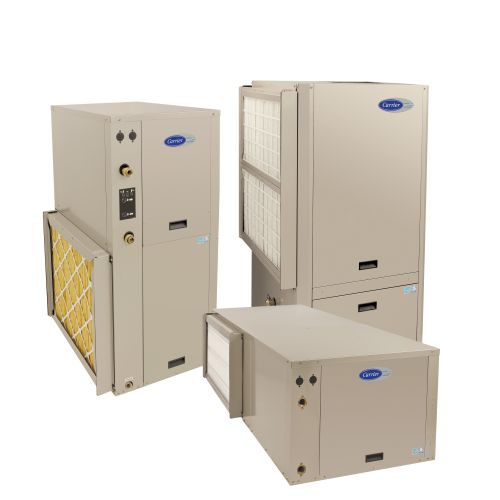
Infinity® Series Geothermal Heat PumpView Brochure |
|---|
| Model Family: GCA |
| Closed Loop Cooling Efficiency: Up to 27.0 EER |
| Closed Loop Heating Efficiency: Up to 4.4 COP |
| Energy Star Certified: ENERGY STAR® |
| Refrigerant Type: Puron Advance |
| Sound Level: Quiet operation |
| Blower Motor: Variable speed ECM blower motor |
| Compressor: Two-stage scroll compressor |
| Factory Warranty Parts: 10-year parts and labor limited warranty upon timely registration |
| Factory Warranty Compressor: 10-year parts and labor limited warranty upon timely registration |
Manufacturer's Stated Benefits:
|

Performance™ Water-to-Water Geothermal Heat PumpView Brochure |
|---|
| Model Family: GWA |
| Closed Loop Cooling Efficiency: Up to 22.6 EER |
| Closed Loop Heating Efficiency: Up to 3.5 COP |
| Energy Star Certified: ENERGY STAR® certified |
| Refrigerant Type: Puron Advance |
| Sound Level: Quiet Operation |
| Blower Motor: ECM Constant Airflow |
| Compressor: Two-Stage Scroll |
| Factory Warranty Parts: 10-year parts and labor limited warranty upon timely registration. |
| Factory Warranty Compressor: N/A |
Manufacturer's Stated Benefits:
|
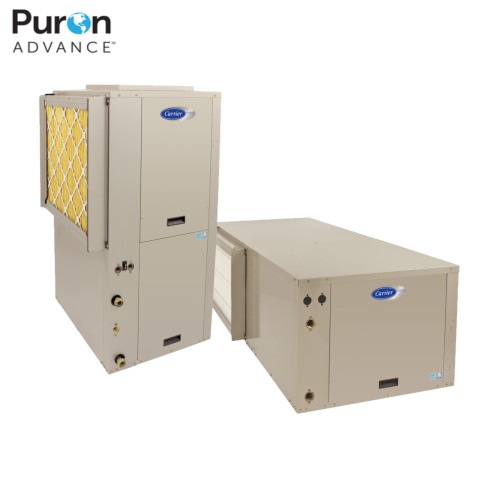
COMFORT™ GEOTHERMAL HEAT PUMPView Brochure |
|---|
| Model Family: GBA |
| Closed Loop Cooling Efficiency: Up to 24.0 EER (Closed Loop) |
| Closed Loop Heating Efficiency: Up to 4.1 COP (Closed Loop) |
| Energy Star Certified: Energy Star |
| Refrigerant Type: Puron Advance refrigerant |
| Sound Level: Quiet Performance |
| Blower Motor: Multi-Speed Blower |
| Compressor: Single-stage (1.5 ton); two-stage (2-5 ton) |
| Factory Warranty Parts: Ten-year parts and five-year labor limited warranty upon timely registration |
| Factory Warranty Compressor: N/A |
Manufacturer's Stated Benefits:
|